Phase 1 Desk Study vs Phase 2 Site Investigation: What’s the Difference?
Phase 1 desk study versus Phase 2 site investigation: how they differ, what each costs, and which one you need at which stage of buying or developing a site.
Quick answer: A Phase 1 desk study is a desktop analysis of published environmental, geological, and historical data — no site visit is required. A Phase 2 site investigation is an intrusive ground investigation involving boreholes, trial pits, and laboratory analysis of soil and groundwater samples. Phase 1 identifies potential risks; Phase 2 confirms whether those risks are real and quantifies them.
If you're buying land, applying for planning permission, or developing a site, you'll almost certainly encounter the terms "Phase 1 desk study" and "Phase 2 site investigation." They sound similar, but they serve very different purposes, cost different amounts, and are needed at different stages of a project. This guide from Site Intelligence explains exactly how they differ, when you need each one, and how they fit into the wider contaminated land assessment framework in England.
Understanding the Contaminated Land Assessment Process
In England, the assessment of potentially contaminated land follows a staged framework. This approach is set out in guidance published by the Environment Agency and referenced by the National Planning Policy Framework (NPPF). The stages are designed so that each step builds on the findings of the one before, avoiding unnecessary cost and effort.
The Four-Stage Framework
- Preliminary Risk Assessment (PRA) — This is the Phase 1 desk study. It uses published data and historical records to build a Conceptual Site Model (CSM) identifying potential sources of contamination, pathways, and receptors.
- Generic Quantitative Risk Assessment (GQRA) — This is the Phase 2 site investigation. Intrusive works (boreholes, trial pits, sampling) test whether contaminants are actually present and compare concentrations against generic assessment criteria.
- Detailed Quantitative Risk Assessment (DQRA) — Where GQRA identifies exceedances, site-specific risk modelling determines whether those contaminant levels actually pose an unacceptable risk in the context of the proposed development.
- Remediation Strategy — If unacceptable risks are confirmed, a remediation strategy sets out how those risks will be managed or removed before development proceeds.
Not every site progresses through all four stages. Many sites are signed off after Phase 1, and a significant proportion are cleared after Phase 2 without needing DQRA or remediation. The staged approach ensures you only spend money on intrusive investigation when the desktop evidence justifies it.
What Is a Phase 1 Desk Study?
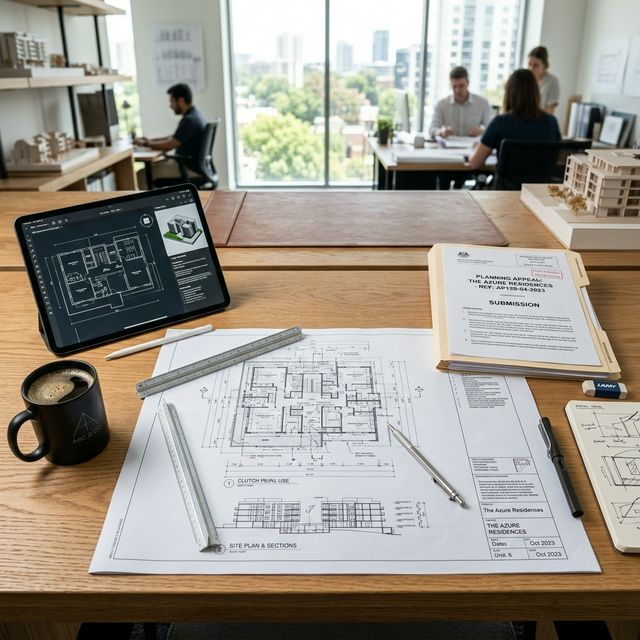
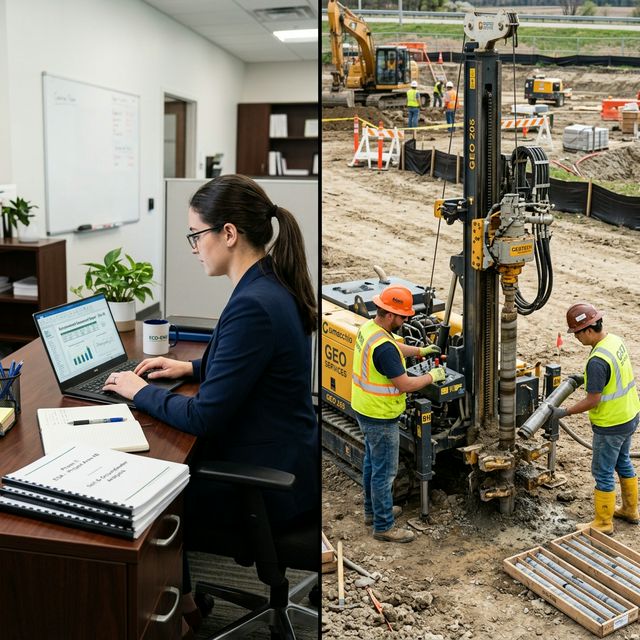
A Phase 1 desk study — formally a Preliminary Risk Assessment — is a desktop analysis of all available published data relating to a site and its surroundings. It does not involve visiting the site or taking any physical samples. Instead, it draws on a wide range of authoritative data sources to assess potential environmental and geotechnical risks.
Data Sources Used in a Phase 1 Desk Study
- Historical Ordnance Survey maps — Typically spanning 100+ years, these reveal former land uses such as factories, fuel storage, waste disposal, or mining activity that may have left a contamination legacy.
- British Geological Survey (BGS) records — Geological mapping, borehole logs, and superficial deposit data help assess ground conditions, groundwater vulnerability, and geotechnical constraints.
- Environment Agency (EA) data — Flood zone mapping, licensed abstractions, pollution incidents, landfill boundaries, and groundwater Source Protection Zones.
- Coal Authority records — Past, present, and future coal mining activity, including shaft locations and subsidence risk areas.
- Local authority contaminated land registers — Sites formally determined as contaminated land under Part 2A of the Environmental Protection Act 1990.
- Radon data — Public Health England radon potential mapping.
- Unexploded ordnance (UXO) risk — Assessment of Second World War bomb risk based on Luftwaffe target mapping and historic bomb census data.
The Conceptual Site Model
The most important output of a Phase 1 desk study is the Conceptual Site Model (CSM). This is a structured assessment of potential contaminant linkages — the relationship between a source of contamination (e.g., a former petrol station), a pathway (e.g., migration through permeable soils), and a receptor (e.g., future residents or controlled waters). If no plausible contaminant linkages are identified, the site may be cleared at Phase 1 without any intrusive investigation.
Site Intelligence's Geotechnical Desk Study is a Tier 1 desktop assessment that covers these data sources comprehensively. Because it is produced entirely from published data, turnaround is typically rapid — in most cases within five working days.
What Is a Phase 2 Site Investigation?
A Phase 2 site investigation — formally a Generic Quantitative Risk Assessment — is an intrusive ground investigation. Physical works are carried out on-site to collect soil, groundwater, and ground gas samples for laboratory analysis. The investigation is designed specifically to test the contaminant linkages identified in the Phase 1 desk study.
Typical Phase 2 Investigation Methods
- Window sample boreholes — Small-diameter boreholes drilled to depths of typically 3–5 metres using a tracked or trailer-mounted rig. These provide continuous soil samples and allow installation of groundwater or gas monitoring standpipes.
- Trial pits — Machine-excavated pits, usually 2–4 metres deep, allowing visual inspection of ground conditions, Made Ground thickness, and shallow contamination.
- Soil sampling — Samples collected at defined intervals for laboratory chemical analysis against published screening values (e.g., LQM/CIEH S4ULs or C4SLs).
- Groundwater sampling — Water samples recovered from monitoring wells and tested for dissolved contaminants including heavy metals, hydrocarbons, and volatile organic compounds.
- Ground gas monitoring — Repeat visits (typically three rounds over several weeks) to measure methane, carbon dioxide, and other gases in monitoring standpipes.
- Geotechnical testing — Laboratory tests on soil samples to determine bearing capacity, compressibility, plasticity, and other engineering properties relevant to foundation design.
Phase 2 investigations are significantly more expensive than Phase 1 desk studies because they involve mobilising drilling equipment, laboratory analysis fees, and specialist reporting. They also take longer — a typical Phase 2 investigation programme, including gas monitoring rounds, can take six to twelve weeks from instruction to final report.
Comparison Table: Phase 1 vs Phase 2
| Phase 1 Desk Study | Phase 2 Site Investigation | |
|---|---|---|
| Method | Desktop analysis of published data | Intrusive ground investigation (boreholes, trial pits, sampling) |
| Site visit required? | No (desktop only) | Yes — physical works on-site |
| Typical cost | £295–£795 (desktop report) | £3,000–£15,000+ depending on site size and complexity |
| Typical turnaround | 3–5 working days | 6–12 weeks (including gas monitoring) |
| What it tells you | Potential risks based on historical use, geology, and environmental setting | Confirmed contaminant concentrations, ground conditions, and gas regime |
| When typically needed | Planning validation, pre-purchase, option-stage screening | When Phase 1 identifies potential contamination linkages; planning condition |
| Key output | Conceptual Site Model (CSM) and risk classification | Factual and interpretive report with lab results and risk assessment |
| Who carries it out | Environmental consultants (desktop) | Specialist ground investigation contractors and laboratories |
When Do You Need Phase 1 Only?
Many sites can be dealt with at Phase 1 stage without progressing to intrusive investigation. A Phase 1 desk study is typically sufficient in the following situations:
- Low-risk sites — Greenfield land with no history of potentially contaminative use, no landfill within influencing distance, and no significant geological or hydrogeological sensitivity.
- Planning validation requirements — Many local planning authorities require a Phase 1 desk study to validate a planning application. If the Phase 1 concludes that contamination risk is low, no further investigation may be needed.
- Property purchase due diligence — Buyers, lenders, and solicitors often commission Phase 1 reports to understand environmental liabilities before exchange of contracts.
- Option-stage screening for land promoters — Before committing to an option agreement, a desktop assessment helps identify whether contamination could affect viability. See our guide to environmental reports for land promoters.
- Pre-application discussions — A Phase 1 report demonstrates to the local authority that you have considered contamination risk, which can strengthen your pre-application case.
Our Site Feasibility Report is specifically designed for early-stage screening and covers contamination risk alongside flood, ecology, heritage, and planning constraints in a single document.
When Do You Need Phase 2?
A Phase 2 site investigation is typically needed when:
- Phase 1 identifies plausible contaminant linkages — If the desk study reveals that contaminative uses have occurred on or near the site, and there are credible pathways to sensitive receptors, intrusive investigation is the logical next step to confirm or rule out actual contamination.
- A planning condition requires it — Local planning authorities routinely impose conditions under the Town and Country Planning Act 1990 (TCPA 1990) requiring intrusive investigation before development commences. The condition typically requires a Phase 2 investigation and risk assessment to be submitted and approved.
- The site has a complex industrial history — Former industrial sites in cities like Sheffield (steel and metals manufacturing) or Manchester (textiles, chemicals, engineering) almost always require Phase 2 investigation due to the range and severity of potential contaminants.
- The site is near or on a former landfill — Landfill gas migration and leachate contamination typically require intrusive investigation and monitoring to characterise.
- Geotechnical design information is needed — Phase 2 investigations provide the geotechnical data (bearing capacity, settlement characteristics, groundwater levels) that structural engineers need to design foundations.
Can You Skip Phase 1 and Go Straight to Phase 2?
This is a question we hear regularly, and the short answer is: it is generally not advisable.
Phase 1 and Phase 2 are not interchangeable — they serve fundamentally different purposes. The Phase 1 desk study provides the evidence base that determines whether a Phase 2 is needed, and if so, what it should investigate. Without a Phase 1:
- The Phase 2 scope may be wrong. The investigation might not target the right contaminants, the right depths, or the right locations. For example, if historical maps show a former fuel storage tank in the north-east corner of the site, the borehole positions should reflect that — but without the Phase 1, that information would be missed.
- You may spend money unnecessarily. If Phase 1 identifies no plausible contaminant linkages, Phase 2 is not required. Going straight to Phase 2 on a low-risk site could mean spending thousands of pounds on intrusive works that were never needed.
- The Phase 2 report may not be accepted. Most local planning authorities and environmental regulators expect to see a Phase 1 report demonstrating that the Phase 2 investigation was properly scoped. A Phase 2 report without a supporting Phase 1 may be rejected or questioned.
There are rare exceptions — for instance, where a site has a very well-documented contamination history and all parties agree that intrusive investigation is inevitable. But in the vast majority of cases, Phase 1 should come first. It is a relatively modest investment (typically under £500 for a desktop report) that can save significant time and money at Phase 2 stage.
How Much Does Each Phase Cost?
Cost is one of the most common questions, and the difference between Phase 1 and Phase 2 is substantial. For a detailed breakdown of Phase 1 pricing, see our guide to Phase 1 desk study costs in 2026.
Phase 1 desk study: Desktop reports typically range from £295 to £795 depending on the scope and the provider. Because no site visit or laboratory work is involved, the cost is predictable and fixed.
Phase 2 site investigation: Costs vary widely depending on the number of boreholes and trial pits, the depth of investigation, the number of samples for chemical and geotechnical analysis, and the number of gas monitoring rounds. As a rough guide:
- Small residential site (single plot): £3,000–£6,000
- Medium residential development (10–50 units): £5,000–£12,000
- Large or complex site: £10,000–£25,000+
These figures are indicative only and will vary depending on location, ground conditions, and the specific requirements of the local planning authority.
Frequently Asked Questions
Is a Phase 1 desk study a legal requirement?
There is no standalone legal obligation to commission a Phase 1 desk study. However, the NPPF (paragraph 189) states that planning decisions should ensure that sites are suitable for their proposed use, taking account of ground conditions and contamination risks. In practice, most local planning authorities require a Phase 1 report as part of a planning application for development on or near potentially contaminated land. Failure to submit one can result in the application being invalidated or delayed.
How long does a Phase 1 desk study take?
A desktop Phase 1 report can typically be produced within three to five working days from instruction. This is significantly faster than a Phase 2 investigation, which involves mobilisation of drilling equipment, fieldwork, laboratory analysis, and reporting — a process that typically takes six to twelve weeks in total.
Can a Phase 1 desk study be done without visiting the site?
Yes. A Tier 1 desktop assessment is based entirely on published data — historical maps, geological records, environmental databases, and regulatory information. A site walkover can add value, but many Phase 1 reports are produced effectively without one, particularly where high-resolution aerial imagery and comprehensive environmental data are available. Our Geotechnical Desk Study is a Tier 1 desktop product that delivers robust risk assessment without requiring a site visit.
What happens if Phase 1 identifies contamination risk?
If the Phase 1 desk study identifies plausible contaminant linkages, the report will typically recommend a Phase 2 intrusive investigation to confirm or rule out actual contamination. The Phase 1 report will outline the recommended scope of the Phase 2 works, including the number and location of boreholes, the type and depth of sampling, and the suite of laboratory analyses required. This is why Phase 1 should always precede Phase 2 — it ensures the intrusive investigation is targeted and cost-effective.
Get Started with a Phase 1 Desk Study
If you need a Phase 1 desk study for planning, property purchase, or site screening, Site Intelligence can help. Our Geotechnical Desk Study provides a comprehensive desktop assessment covering contamination, ground conditions, flood risk, radon, and mining — with turnaround in most cases within five working days.
For a broader view that also covers planning constraints, ecology, and heritage, our Site Feasibility Report is a cost-effective first step before committing to a site.
Contact us for a quote or to discuss which report is right for your project.
This is general guidance only. Every site and project is unique — please contact us for advice specific to your circumstances.
Feasibility Intelligence
Planning-ready intelligence from From £995 — delivered within 48hrs
Ready to get started?
Complete desktop planning intelligence for any site in England. From £199.