Guides Dec 28, 2025 2 min read
Construction Management Plans: What Planning Officers Actually Want to See
A CMP is not a box-ticking exercise. Here is how to write one that satisfies the condition and actually helps manage your build.
What Is a Construction Management Plan?
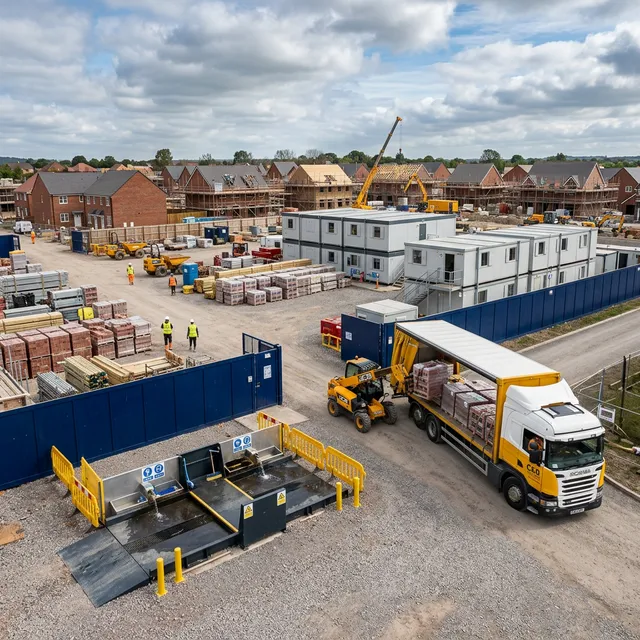
A Construction Management Plan is one of the most commonly attached planning conditions in urban and suburban areas. Its purpose is to demonstrate to the local planning authority that you have thought through the practical impacts of your construction project — noise, dust, traffic, waste, and neighbour disruption — and have a credible plan to manage them. The problem is that many CMPs are written as generic documents that fail to address the specific characteristics of the site, leading to rejection and delay.
What Planning Officers Look for in a CMP
Planning officers review CMPs against the wording of the condition and the relevant local plan policies. Most conditions follow a similar pattern: they require details of construction traffic routing, loading and unloading arrangements, storage of materials, working hours, dust and noise mitigation, and measures to prevent mud and debris on the public highway. Some boroughs add specific requirements for Construction Logistics Plans, Non-Road Mobile Machinery registers, or Direct Vision Standard compliance for construction vehicles.
Proportionality: Scaling Your CMP to the Project
The best CMPs are proportionate to the scale of the project. A householder extension in a quiet residential street does not need a 30-page document — a concise 3-4 page plan covering working hours, delivery arrangements, neighbour notification, and basic dust and noise measures is usually sufficient. A major development near a school or hospital, on the other hand, needs a comprehensive document with detailed method statements, monitoring protocols, and a dedicated site manager contact.
Traffic Management and Delivery Routing
Traffic management is often the section that receives the most scrutiny. Planning officers want to see specific delivery routes, not just a statement that deliveries will be managed. How will construction vehicles access the site? Where will they turn? What are the swept path constraints? Is there a school on the route that affects delivery timing? These details show that you understand the local context and have planned accordingly.
Dust and Noise Control in Air Quality Management Areas
Dust and noise management have become increasingly important, particularly in Air Quality Management Areas. The Greater London Authority requires all major construction sites to follow the GLA SPG on dust control, and many outer London boroughs apply similar standards. Your CMP should reference the relevant guidance and set out specific measures: wheel washing, covered stockpiles, damping down, hoarding height, plant silencing, and vibration monitoring where appropriate.
At Site Intelligence, our Construction Management Plans are written to discharge conditions, not just tick a box. Each plan is tailored to the specific site, referencing the actual road network, nearby sensitive receptors, and the relevant council's validation requirements. We produce them as branded Word documents that can be submitted directly as part of a condition discharge application — typically within a week of instruction.
Related Report
Feasibility Intelligence
Planning-ready intelligence from From £995 — delivered within 48hrs
Ready to get started?
Complete desktop planning intelligence for any site in England. From £295.