Planning Jan 5, 2026 2 min read
Biodiversity Net Gain: What It Means for Your Planning Application
Since February 2024, most developments must deliver a 10% biodiversity net gain. Here is what that actually involves.
What Is Biodiversity Net Gain and When Did It Become Mandatory?
Biodiversity Net Gain — BNG — became mandatory for most planning applications in England from February 2024. The requirement is straightforward in principle: developments must deliver at least a 10% net gain in biodiversity value compared to the pre-development baseline. In practice, understanding whether BNG applies to your project, what it will cost, and what surveys you need is anything but straightforward.
BNG Exemptions: Which Projects Are in Scope?
The first question most applicants have is whether their project is exempt. Small-scale householder applications — extensions, loft conversions, outbuildings — are generally exempt. So are developments affecting less than 25 square metres of habitat, and projects with no impact on priority habitats. However, new-build houses, change of use, and developments requiring full planning permission almost always fall within scope, even on brownfield sites.
Baseline Habitat Assessment and the DEFRA Biodiversity Metric
The BNG process starts with a baseline habitat assessment. A qualified ecologist visits the site and maps all existing habitats — grassland, hedgerows, trees, scrub, ponds, and even hard standing — against the DEFRA Biodiversity Metric. Each habitat type is assigned a biodiversity value based on its condition, strategic significance, and distinctiveness. This baseline score is the benchmark against which the 10% gain must be demonstrated.
Delivering the 10% Gain: On-Site and Off-Site Options
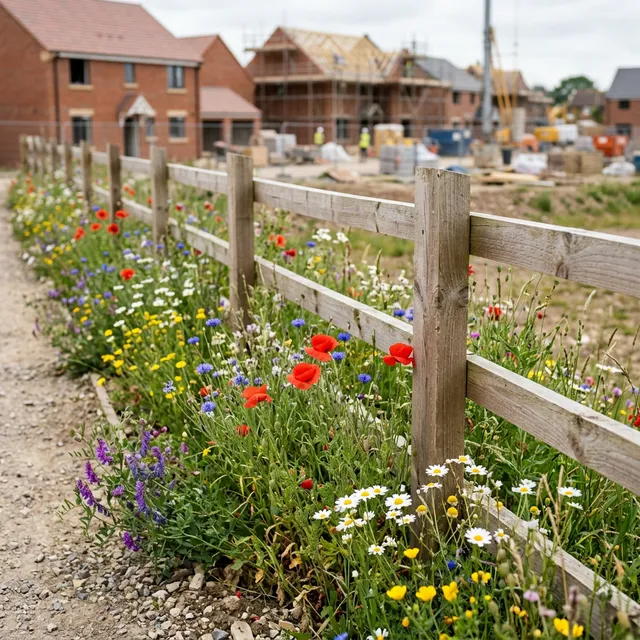
Achieving the 10% gain typically involves a combination of on-site habitat creation, habitat enhancement, and — where on-site delivery is not feasible — off-site biodiversity units or statutory credits. On-site solutions might include wildflower meadow planting, new hedgerow creation, green roofs, or tree planting. The key is that habitats must be maintained for at least 30 years, secured by a legal agreement.
Ecological Survey Timing and Seasonal Constraints
Timing is critical and this is where many projects get caught out. If your site contains habitats that might support protected species — breeding birds, bats, great crested newts — the ecological surveys can only be carried out at specific times of year. Bat surveys, for instance, are restricted to May through September. Miss the survey window and your application could be delayed by up to a year. A BNG screening assessment early in the process identifies these timing constraints before they become programme risks.
At Site Intelligence, our BNG Screening and Feasibility report gives you a clear picture of whether BNG applies, what your likely baseline score is, and what surveys and mitigation measures you will need. We use the latest DEFRA Biodiversity Metric and cross-reference with MAGIC Map data, priority habitat inventories, and local nature recovery strategies. The aim is simple: give you the information you need to plan your project without seasonal survey delays blowing your programme.
Related Report
Feasibility Intelligence
Planning-ready intelligence from From £995 — delivered within 48hrs
Ready to get started?
Complete desktop planning intelligence for any site in England. From £295.