Site Intelligence Feb 5, 2026 2 min read
Flood Risk Assessments: When You Need One and What to Expect
Not every site needs a full flood risk assessment — but getting it wrong can derail your planning application. Here is how to know where you stand.
When Is a Flood Risk Assessment Required?
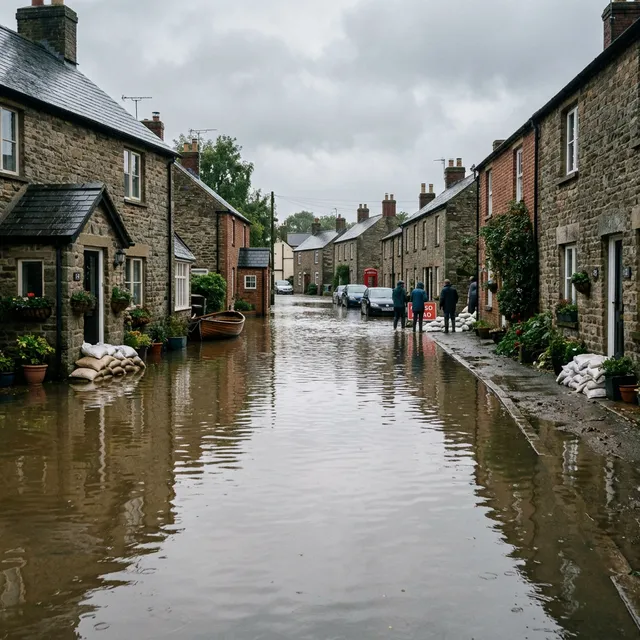
Flood risk is one of the most common reasons planning applications get delayed or refused. If your site falls within Flood Zone 2 or 3 — or even Flood Zone 1 with a site area over one hectare — the Environment Agency and your local planning authority will expect a Flood Risk Assessment as part of your submission. Understanding when you need one and what it should contain can save you months of back-and-forth with the council.
Sources of Flood Risk and Climate Change Allowances
A Flood Risk Assessment evaluates all sources of flood risk to your site: fluvial (river), pluvial (surface water), groundwater, sewer, and tidal. It is not simply about whether the site has flooded before — it is about the probability of flooding over the lifetime of the development, typically 100 years for residential use. The assessment must also consider the impact of climate change on future flood risk, using the latest climate change allowances published by the Environment Agency.
Desktop Assessments vs Site-Specific Surveys
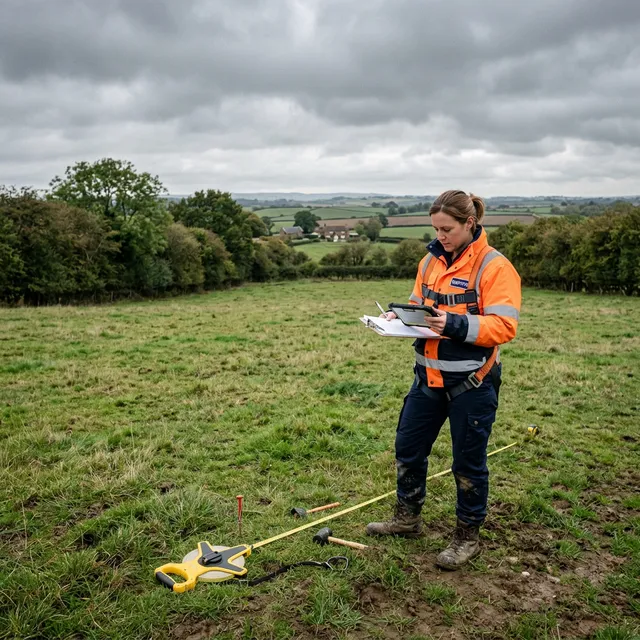
For many sites, a Tier 1 desktop assessment is sufficient. This draws on publicly available data — Environment Agency flood maps, historical flood records, geology and groundwater data, sewer records, and surface water mapping — to build a comprehensive picture of flood risk without the need for costly site investigations. Our desktop assessments reference over fifteen authoritative data sources and present the findings with a clear Decision Risk Score so you can see at a glance where the risks lie.
Understanding the Sequential Test
The Sequential Test is a planning concept that often catches applicants out. Before granting permission for development in a flood risk area, the council must be satisfied that there are no reasonably available sites at lower flood risk where the development could be located. For individual householder applications this is rarely an issue, but for new-build developments and change-of-use applications it can be a significant hurdle. Your FRA should address the Sequential Test head-on.
Flood Risk Mitigation and SuDS Design
Mitigation measures are where good engineering makes a real difference. Finished floor levels, flood-resilient construction, SuDS drainage design, and safe access and egress routes can all be designed to reduce residual risk to acceptable levels. The key is proportionality — the mitigation should match the actual risk, not a worst-case assumption that adds unnecessary cost to the project.
At Site Intelligence, we deliver desktop Flood Risk Assessments within 48 hours. Each report is tailored to your specific site and the requirements of your local planning authority, with clear recommendations that planning officers can adopt directly. If a site-specific survey or detailed hydraulic modelling is needed, we will tell you — but in our experience, a well-researched desktop assessment is sufficient for the majority of planning applications.
Related Report
Feasibility Intelligence
Planning-ready intelligence from From £995 — delivered within 48hrs
Ready to get started?
Complete desktop planning intelligence for any site in England. From £295.