Site Intelligence Jan 20, 2026 2 min read
What Is a Geotechnical Desk Study and Do You Need One?
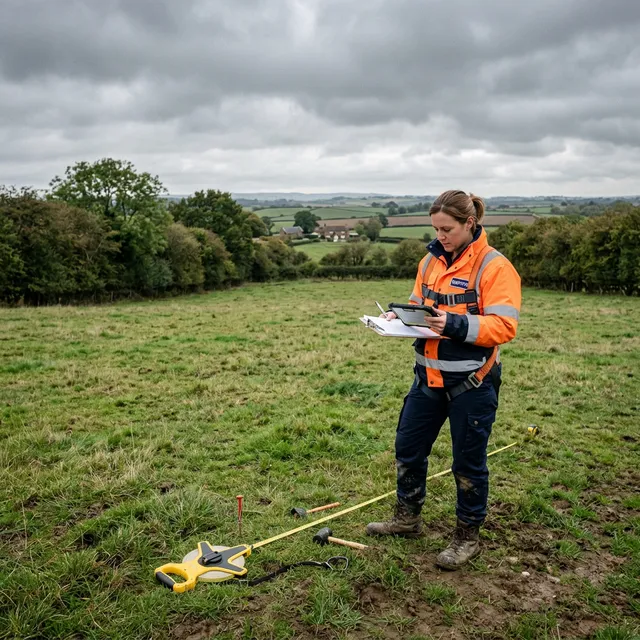
The ground beneath your site determines your foundation costs. A desk study tells you what to expect before you spend a penny on trial pits.
What Is a Geotechnical Desk Study?
Every building sits on the ground, and the ground is never as simple as it looks. A geotechnical desk study is the first step in understanding what lies beneath your site — the geology, groundwater conditions, contamination history, and ground stability risks that will determine your foundation design and, ultimately, a significant portion of your construction budget.
Data Sources Used in a Desk Study
The desk study draws on a wide range of publicly available data: British Geological Survey maps and borehole records, Ordnance Survey historical mapping, Environment Agency data, mining and quarrying records, and local authority contaminated land registers. The aim is to build a geological model of the site without the cost of intrusive investigation. For many projects — particularly extensions, small new-builds, and change-of-use developments — a desk study provides enough information to design foundations with confidence.
Ground Conditions in London and the South East
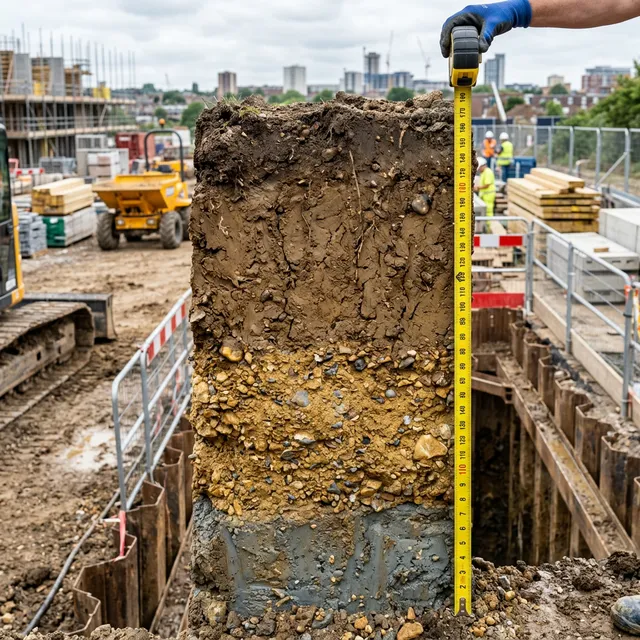
Ground conditions in Surrey and London are notoriously variable. Within a few kilometres you can move from London Clay to Lambeth Group deposits to river terrace gravels, each with very different engineering properties. Clay soils are prone to shrinkage and swelling with moisture changes, which is a particular concern near trees. Sandy soils may have good bearing capacity but can be susceptible to running sand conditions during excavation. Chalk can contain solution features that create sudden voids.
Contamination Risk on Brownfield Sites
Contamination is another critical factor, especially on brownfield sites. Historical mapping can reveal former industrial uses — gasworks, tanneries, factories, fuel storage — that may have left a legacy of contaminated soil or groundwater. If contamination is suspected, the desk study will recommend further investigation and outline the potential remediation requirements. This is essential information before committing to a site purchase or submitting a planning application.
How Desk Study Findings Inform Foundation Design
Foundation design is directly informed by the desk study findings. On straightforward sites with competent bearing strata at shallow depth, standard strip or trench-fill foundations may be appropriate. Where ground conditions are more challenging — deep made ground, soft compressible soils, high water tables, or proximity to trees on shrinkable clay — engineered solutions such as piled foundations or raft foundations may be necessary. Knowing this upfront avoids the nightmare scenario of discovering bad ground after construction has started.
Our geotechnical desk studies at Site Intelligence interrogate all relevant data sources and present the findings in a clear, engineering-focused format. Each report includes a preliminary foundation risk assessment with indicative foundation recommendations, so you have actionable information from day one. If intrusive investigation is genuinely needed, we will tell you exactly what scope of work to commission — no more, no less.
Related Report
Feasibility Intelligence
Planning-ready intelligence from From £995 — delivered within 48hrs
Ready to get started?
Complete desktop planning intelligence for any site in England. From £295.