Short answer
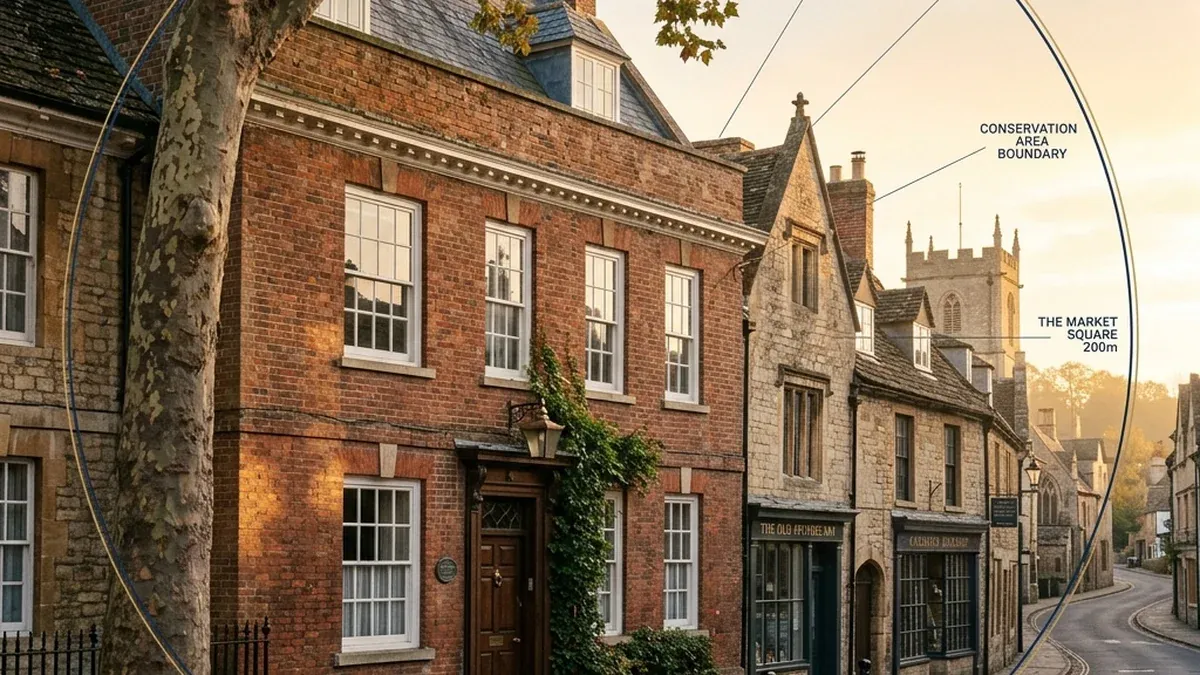
A listed building next door, a conservation area boundary clipping the red line, a scheduled monument across the field. Any of these and the LPA will ask for heritage evidence before validating. For a small developer or SME housebuilder, that question lands at the worst moment: an option agreement running, an agent's bid deadline this Friday, an architect quoting fees against a scheme that may not survive contact with the Conservation Officer.
The desktop heritage layer answers three questions. Is there a designated or non-designated heritage asset on or near the site. Does the proposal engage its setting. What is the likely scale of harm and what specialist input will the LPA expect. That tells you whether to bid, redesign, commission a chartered conservation specialist, or walk away before the architect invoice lands.
Request a Site Appraisal quote or see a sample Site Intelligence report. From £295.
When a heritage statement is triggered
A heritage statement is required where the proposal affects a designated heritage asset or its setting. The common triggers:
- A listed building on the site or close enough that setting is engaged. The Section 66 special-regard duty under the Listed Buildings and Conservation Areas Act 1990 applies to the decision.
- The site sits within or adjacent to a conservation area. The Section 72 duty to preserve or enhance character applies.
- A scheduled monument is on or adjacent to the site. Scheduled Monument Consent is a separate statutory consent from planning permission.
- A registered park, garden, or battlefield within or adjacent to the site.
- The setting of a World Heritage Site.
- An archaeological notification area or area of archaeological potential.
- A non-designated heritage asset on the LPA Local List or Historic Environment Record.
NPPF policy HE5(1) (August 2026) requires the applicant to describe the significance of the asset and the impact of the proposal on that significance, proportionate to importance and harm. Policy HE6 sets the harm tests. Harm to a designated heritage asset is weighed against the public benefits of the proposal (HE6(4)). Substantial harm or total loss should be refused unless it is necessary to achieve substantial public benefits that outweigh it, or all four conditions in HE6(5) apply; for grade II assets it should be exceptional, and for assets of the highest significance wholly exceptional (HE6(6)). The harm tests inform the planning balance, they do not alone determine the outcome.
The position in Wales, Scotland, and Northern Ireland differs. Cadw, Historic Environment Scotland, and the Historic Environment Division apply their own frameworks.
What our desktop heritage statement covers
| In our desktop heritage layer | Sourced from |
|---|---|
| Listed buildings within and around the site | Historic England National Heritage List for England |
| Conservation area boundaries and character appraisal | LPA conservation area maps and character appraisal documents |
| Scheduled monuments | NHLE scheduled monuments dataset |
| Registered parks and gardens | NHLE registered parks dataset |
| World Heritage Sites | UNESCO and Historic England datasets |
| Non-designated heritage assets | LPA Local List and Historic Environment Record where published |
| Archaeological notification areas | LPA and Historic Environment Record |
| Historic OS map regression (1880s onwards) | Historic Ordnance Survey maps |
| Setting analysis (proximity and view-cone interpretation, not a fixed radius) | Geometry analysis with judgement on long views |
| Significance description per NPPF policy HE5(1) | Combined NHLE descriptions and significance framework |
| Harm framing under NPPF policy HE6 | Planning case framework, indicative not determinative |
What you receive: mapped constraints with the red line overlaid, an asset list with grade and distance, a setting risk note, the likely LPA ask, the next study (and whether it needs a chartered conservation specialist or CIfA-registered archaeologist), an indicative cost range, programme impact, and a bid recommendation.
See what is included in our desktop pack. Where chartered conservation specialist input is required, the report names the study, indicative cost range, and typical timeline so you can brief your architect or planning consultant with numbers, not guesses.
What this desktop heritage statement does not replace
The desktop layer is a planning-grade screening, not a substitute for signed specialist work. Not included:
- A chartered conservation specialist's signed Heritage Statement under PI cover, which contested or substantial-harm applications will need.
- Listed Building Consent technical drawings and method statement.
- Archaeological field evaluation (trial trenches) by a CIfA-registered organisation.
- Above-ground building recording or archaeological watching brief during groundworks.
- Structural engineer's justification for works to a Grade I or II* listed building.
- Daylight, sunlight, or townscape assessment.
Where any of these are triggered, the report names the specialist study, indicative cost range, and typical timeline.
Four packs sized to four decisions
| Pack | What it does for heritage | Who buys it | Price |
|---|---|---|---|
| Site Appraisal | Identifies listed buildings, conservation area, scheduled monuments, registered parks, archaeological notification areas | Small developer testing a bid or off-market lead before spending on architect or legals | From £295 |
| Feasibility Intelligence | Adds heritage risk grading and indicative cost provision for specialist input | SME housebuilder pricing acquisition or briefing the architect on infill, backland, or conversion sites | From £995 |
| Pre-Application Pack | Adds desktop heritage evidence section to support pre-app advice | Developer with pre-app booked who needs the heritage section drafted alongside FRA, ground, BNG | From £2,250 |
| Consultant Handover Pack | Desktop heritage evidence packaged for submission, with chartered conservation specialist sign-off commissioned where required | Developer at submission stage on a conservation-area extension, barn conversion, or listed-building-adjacent scheme | Tailored |
Heritage sits within the wider constraint stack covered in our guide on what reports you need for planning permission and feeds into the development land due diligence guide. General context on consents is on GOV.UK planning permission guidance.
Send the boundary today
Send four inputs: postcode, red-line boundary (KML, shapefile, or sketch), intended use, and indicative dwelling count. Request a quote on the developer page. We confirm the scope within the working day, and the price and the delivery date before you pay. You receive the constraint screen, asset list, setting risk note, and next-study recommendation on the confirmed date.
Request a quote for a Site Appraisal from £295, or See a sample report first.