Guide May 6, 2026 9 min read
Development Land Due Diligence Before You Commit
Desktop development land due diligence: planning, flood, ground, ecology, heritage and viability checks before you bid or exchange.
You are 14 days from auction with the legal pack already on the table, or inside an exclusivity period that runs out next Friday, or holding an option fee quote that needs a board sign-off by Monday. The deposit is real money. The architect concept fee is already quoted. The bridging facility has a drawdown date. Development land due diligence is the work that decides, before offer, auction bid, exchange or option signature, whether any of that capital should be committed at all.
Three deals die the same way. The first is a residential scheme on a parcel that turns out to sit in Flood Zone 3b functional floodplain, where residential is not a compatible use and the sequential test under NPPF paragraph 174 (December 2024) is rarely passable. The second is a Green Belt site bought on the assumption it qualifies as grey belt, only for the parcel to fail the tests at NPPF paragraphs 154 to 155 (December 2024) because it strongly contributes to one or more of the five Green Belt purposes. The third is a site inside a Coal Authority Development High Risk Area, where a Coal Mining Risk Assessment is triggered at validation and nobody screened for it. None of these show on a site visit. None show on a title scan. The flood and Coal Authority triggers show on a desktop pass. The grey belt question is flagged on desktop and resolved through targeted planning judgement.
What development land due diligence actually means
Land due diligence sits between two workstreams that small developers already pay for. It is the planning and physical-constraint layer that decides whether the legal and architectural workstreams are worth commissioning at all.
| Workstream | Who does it | What it answers | What decision it supports |
|---|---|---|---|
| Legal conveyancing diligence | Solicitor | Title, easements, restrictive covenants, overage, special conditions of sale | Can we own and transfer it cleanly |
| Land due diligence | Planning and constraint analyst | Policy weight, designations, flood, ground, ecology, heritage, infrastructure, viability | Is the scheme deliverable, at what cost, and on what timeline |
| Architectural feasibility | Architect | Drawings, massing, internal layouts, GIA | How does the scheme sit on the plot |
Land due diligence is evidenced against authoritative national datasets and the December 2024 NPPF. It is the layer the buyer without an in-house planning team is usually missing, and it is the layer that determines whether the solicitor and architect fees are worth spending.
Eight categories you must check before you commit
A serious land due diligence pass works through eight constraint domains. Each has a clear commercial effect on the bid, the offer conditions, or the programme.
- Planning policy and five-year housing land supply. Local plan status, allocation or absence, presumption in favour and the tilted balance at NPPF paragraph 11(d) where the LPA cannot demonstrate a five-year supply. Commercial effect: weight of argument at appeal, price chip on policy-compliant schemes.
- Site designations. Green Belt, AONB, conservation area, listed buildings, Tree Preservation Orders, ancient woodland, local landscape designations. Commercial effect: walk-away risk on principle.
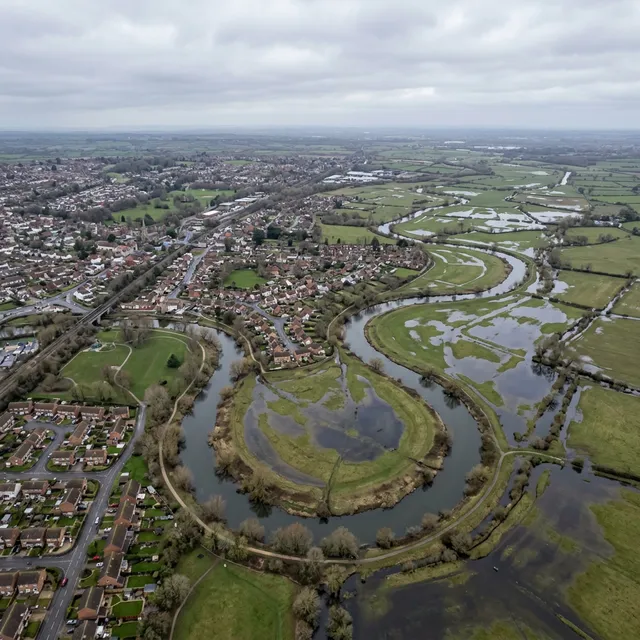
- Flood risk. Environment Agency Flood Zones 1, 2, 3a and 3b, surface water flooding, reservoirs, the sequential test under NPPF paragraph 174. Commercial effect: walk-away risk in Zone 3b residential, specialist hydraulic modelling triggered in complex Zone 3 sites.
- Ground conditions. Geology, contamination from prior uses, Coal Authority Development High Risk Areas that trigger a CMRA, radon protection. Commercial effect: condition precedent, Phase 2 investigation cost, programme delay.
- Ecology and BNG. Habitat baseline, statutory designations, protected species risk, mandatory Biodiversity Net Gain. Commercial effect: off-site BNG unit cost, season-bound survey window extending exclusivity.
- Heritage setting. Listed buildings within 200m, conservation area context, scheduled monuments, the section 66 duty under the Listed Buildings and Conservation Areas Act 1990, the heritage harm tests at NPPF paragraphs 207 and 213 to 215. Commercial effect: scheme redesign, refusal risk, specialist Heritage Statement triggered.
- Access, transport, and infrastructure. Adopted highway, visibility splays, water, foul drainage, electricity capacity, trip-generation thresholds. Commercial effect: Transport Assessment cost, S278 contributions, undeliverable access as a walk-away.
- Policy levies and viability. CIL charging schedule, S106 typical heads, affordable housing target, indicative GDV against residual land value. Commercial effect: residual land value, the price you can actually pay.
Skip a category and you import the risk into the bid price.
The two highest-cost mistakes small developers make
The first mistake is exchanging on a site in Flood Zone 3b without testing the sequential test under NPPF paragraph 174 (December 2024). Zone 3b is functional floodplain. Residential is not a compatible use. The sequential test asks whether reasonably available sites exist with a lower flood risk, and where they do, the application typically falls. For a 1-9 dwelling scheme, a 10% auction deposit on a £600,000 lot is £60,000. That sum is exposed from the fall of the hammer.
The second mistake is committing architect fees on a Green Belt site that does not satisfy the grey belt tests at NPPF paragraphs 154 to 155 (December 2024). The grey belt route is narrower than press coverage suggests. The parcel must not strongly contribute to any of the five Green Belt purposes set out at NPPF paragraphs 142 to 145, and the scheme must meet the golden rules at paragraph 156 on affordable housing, infrastructure contributions, and accessible green space. A 6-unit scheme can absorb £20,000 to £50,000 of architect-led concept work before the test is properly applied. Our grey belt site check guide sets out how the test reads in practice.
Both mistakes share a structure. Capital was committed before constraint evidence was on the table.
When to walk away versus when to negotiate
Constraints fall into three commercial categories. The decision is not whether the constraint exists, it is whether policy or cost can mitigate it.
Walk. Scheme-defining constraints with no realistic policy mitigation. Residential proposals on Flood Zone 3b functional floodplain. A footprint over a scheduled monument. Primary access undeliverable on highways grounds. A Green Belt parcel that clearly fails the grey belt tests at NPPF paragraphs 154 to 155.
Negotiate. High-risk-but-mitigable constraints. BNG cost where on-site delivery is constrained and off-site units have to be purchased. S106 contributions and affordable housing percentage. Contamination remediation budgets where a Phase 1 desktop flags a credible source-pathway-receptor linkage that needs Phase 2 work to scope.
Continue with risk priced in. Ecology survey programme over a season. Archaeology watching brief. Transport contributions in the normal range for the LPA. A routine drainage strategy.
Six commercial actions convert the diligence into negotiating leverage your solicitor, board, or funder can act on.
- Reduce the bid using the screen as written evidence of the cost being priced in.
- Make exchange conditional on a specific specialist result, such as a Phase 2 ground investigation or a positive pre-application response from the LPA.
- Request vendor warranties on contamination, prior uses, and statutory notices.
- Extend the exclusivity period to accommodate a season-bound survey window.
- Request vendor disclosure of existing reports, planning history, and pre-application correspondence before exclusivity expires.
- Reserve the right to renegotiate price on findings above a defined materiality threshold.
Site Appraisal is the decision-moment pack
For a 1-9 dwelling buyer at the bid, offer or auction stage, Site Appraisal is the pack the page exists to recommend. It is built for the small developer without an in-house planning team, and the delivery date is confirmed before you pay, so you know whether it fits an auction legal pack window.
Site Appraisal. Decision: is this site worth a serious look, before I bid or offer. Deliverable: traffic-light go / no-go verdict, constraint summary and overlay map, fatal-flaw flags, costed list of specialist reports if you proceed. Inputs: postcode, red-line boundary, intended use, indicative dwelling count. Price and turnaround: £295 (1-9 dwellings), £395 (10-50), £595 (51-200), delivery date confirmed before you pay.
If the screen is green and capital is going in, three further packs cover deeper decisions.
| Pack | Decision | From | Turnaround |
|---|---|---|---|
| Feasibility Intelligence | Pre-exchange, pre-option, IC paper | £995 | Confirmed before you pay |
| Pre-Application Pack | Walking into a formal LPA pre-app meeting | £2,250 | Confirmed before you pay |
| Consultant Handover Pack | Submitting alongside architect drawings | Tailored | Tailored |
The Pre-Application Pack and Consultant Handover Pack contain desktop screening notes across flood, heritage, transport, BNG, geo, contamination, noise, air quality, arboriculture and ecology. They are desktop evidence, not signed specialist assessments. The law and the validation list still drive when a chartered signature or site attendance is required.
How a desktop pack compares to a traditional consultancy route
The data sources are the same authoritative national datasets. The difference is integration and timing. One firm, one fixed price for the desktop layer, with specialist commissions clearly scoped where they are required.
Traditional consultancy delivers a desktop layer of comparable scope to the Pre-Application Pack across 8 to 12 separate consultants over 8 to 12 weeks at £15,000 to £52,000. The desktop pack consolidates that screening layer from £2,250, with specialist signed reports commissioned separately where validation requires them. Our planning report cost benchmark for 2026 sets out the comparison consultant by consultant.
| Decision moment | What you need | Desktop pack | Traditional consultancy benchmark |
|---|---|---|---|
| Pre-bid go / no-go | Constraint screen and fatal flaw flags | Site Appraisal £295-£595 | Bespoke desktop £1,500-£3,000, 2-4 weeks |
| Pre-acquisition or option diligence | Feasibility, costings, board paper | Feasibility Intelligence from £995 | Coordinated feasibility £3,000-£8,000, 4-8 weeks |
| Formal LPA pre-application | Desktop constraint notes, draft Planning Statement and DAS | Pre-Application Pack from £2,250 | Consultant-led pack £8,000-£20,000, 8-12 weeks |
| Application submission | Validation-ready submission coordination | Consultant Handover Pack tailored | 8-12 separate consultants £15,000-£52,000, 8-12 weeks |
Buying at auction? Read the constraints before the hammer
Auction lots typically have a legal pack published 2 to 4 weeks before the auction date. The legal pack confirms title, planning history, searches, and special conditions of sale. It rarely includes a flood risk read against the EA Flood Zones, a Coal Authority CMRA trigger check, a BNG screening, a heritage-setting analysis, or a grey belt test. Any of those can change the deal economics or kill the scheme outright.
The Site Appraisal at £295 to £595 reads the constraints the legal pack leaves out, and we confirm the delivery date before you pay, so you know whether it lands inside the legal pack window. Send the site as soon as the pack lands, and decide your bid limit once the screen is back. Once the hammer falls you are committed to a 10% deposit on the day and typically a 28-day completion, with very limited routes back beyond misrepresentation, title defects or specific special conditions. The screen is the protection between legal pack publication and the hammer. See what is included in our desktop pack.
What sits outside scope, by design
The desktop pack is designed to commission specialist work well, not to imitate it. The following sit outside scope and are flagged with cost and timeline where triggered.
- Intrusive ground investigation: Phase 2 boreholes, trial pits, BRE 365 infiltration testing.
- Seasonally-windowed protected species field survey requiring CIEEM-registered ecologist attendance: bat emergence, great crested newt eDNA, breeding bird.
- Hydraulic flood modelling for complex Zone 3 sites by a chartered flood engineer.
- Topographical and measured surveys.
- Tree surveys to BS 5837 carried out on site.
- MRTPI formal planning representations.
- CMLI-registered Landscape and Visual Impact Assessment.
- Chartered transport engineer Transport Assessment where trip generation triggers it.
- Chartered drainage engineer signed-off drainage layout.
- RICS Red Book valuation.
- Architect drawings: floor plans, elevations, sections.
Your solicitor handles title and special conditions. Your architect handles drawings. The desktop pack handles the planning and constraint layer between them, and tells both what to act on.
Send the boundary, get the scope, price and date confirmed
For a 1-9 dwelling small developer at auction, in exclusivity, or pre-option, Site Appraisal at £295 is the right next step. Inputs are simple, the delivery date is confirmed before you pay, and the output goes straight to your solicitor and your bid limit.
- Inputs needed: postcode, title plan or red-line boundary, intended use, indicative dwelling count.
- Turnaround: delivery date confirmed before you pay.
- Price: £295 (1-9 dwellings), £395 (10-50), £595 (51-200).
- Deliverable: traffic-light verdict, constraint overlay maps, headline flags, costed list of triggered specialist reports.
For background reading on what a serious land appraisal contains, see our site appraisal report (2026 UK guide).
Ready to get started?
Complete desktop planning intelligence for any site in England. From £295.