Planning & Regulation Mar 17, 2026 3 min read
BNG Small Site Exemption: What It Means for Developers Building Under 10 Homes
BNG exemption for sites up to 0.2 hectares, announced December 2025, plus a brownfield residential exemption. What changes for schemes of 1-9 dwellings.
Since April 2024, all planning applications in England for sites of one or more dwellings have been subject to a mandatory 10% biodiversity net gain requirement. For major developments, this was already priced in. But for small sites — schemes of 1-9 dwellings — the cost and complexity of BNG compliance has been disproportionate. A single self-build plot does not generate enough value to absorb £10,000-£20,000 in ecological surveys, habitat creation plans, and 30-year management commitments. The government has recognised this, and changes are coming.
The 0.2-Hectare Area-Based Exemption
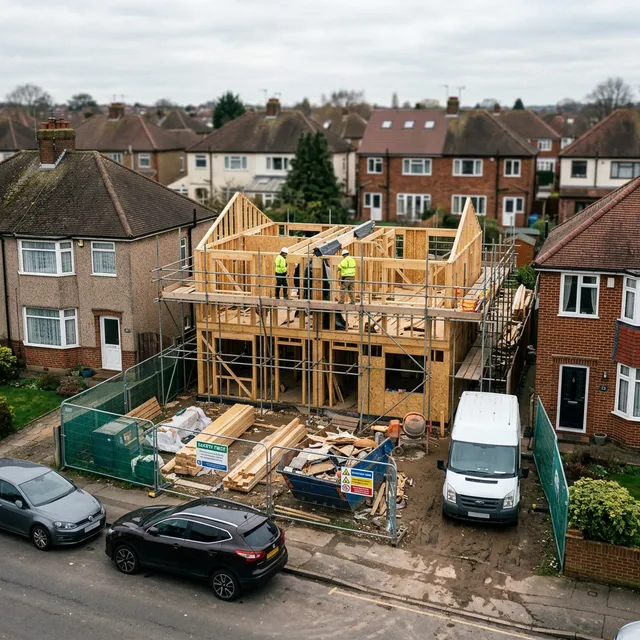
In December 2025, the Housing Secretary announced that the government will introduce an area-based exemption for smaller sites of up to 0.2 hectares. This is a significant threshold. A 0.2-hectare site is roughly 2,150 square feet — large enough for 2-4 houses in a suburban context, or a single substantial detached home with garden. For developers and self-builders working at this scale, the exemption removes the BNG requirement entirely, eliminating the need for ecological baseline surveys, biodiversity metric calculations, habitat creation plans, and 30-year management and monitoring obligations.
The financial impact is material. A typical BNG compliance package for a small site includes a Preliminary Ecological Appraisal (£800-£1,500), a biodiversity metric calculation (£500-£1,000), a habitat creation and management plan (£1,500-£3,000), and potentially off-site biodiversity credits if on-site net gain cannot be achieved (£20,000+ per unit in some areas). For a 3-unit scheme with a gross development value of £900,000, BNG compliance costs of £5,000-£15,000 represent a meaningful hit to margin. The exemption eliminates this entirely for qualifying sites.
The Brownfield Residential BNG Exemption
There is a second exemption in the pipeline that is equally significant: a targeted BNG exemption for residential brownfield development. The government has committed to consulting on this measure, and the direction of travel is clear — encouraging brownfield housing delivery by removing regulatory barriers. If your site is previously developed land in a settlement boundary, this exemption could apply regardless of site size. The detail is still to be confirmed through consultation, but developers with brownfield schemes should be tracking this closely.
For sites that do not qualify for either exemption, the BNG requirement remains in full force. The 10% net gain must be demonstrated through the statutory biodiversity metric, and the habitat must be secured for at least 30 years through a planning condition, Section 106 agreement, or conservation covenant. Off-site delivery and statutory biodiversity credits remain available as fallback options, but credit prices have increased significantly since the scheme launched — Natural England credits now cost £42,000 or more per unit in some habitat types.
Protected Species Obligations Still Apply
The interaction between BNG exemptions and other ecological requirements is important to understand. Even if your site is exempt from the 10% BNG requirement, you are still subject to the general duty to protect species under the Wildlife and Countryside Act 1981 and the Conservation of Habitats and Species Regulations 2017. If your site contains bat roosts, great crested newt habitat, or nesting birds, you still need appropriate surveys and licences. The BNG exemption removes the mandatory net gain calculation — it does not remove the obligation to avoid harming protected species.
The timeline for implementation is not yet confirmed. The government announced the 0.2-hectare exemption in December 2025, and a full consultation response with implementation details is expected in 2026. The brownfield exemption consultation has not yet been published. For planning applications submitted now, the full BNG requirement still applies unless and until the exemptions are formally enacted through secondary legislation.
Timing Your Application Around the Exemptions
What does this mean in practice? If you are a small developer or self-builder with a site under 0.2 hectares, it may be worth timing your planning application to coincide with the exemption coming into force — particularly if BNG compliance would cost you £5,000 or more. If you have a brownfield residential site of any size, monitor the consultation on the brownfield exemption closely. And if your site falls outside both exemptions, factor BNG into your costs from day one rather than treating it as an afterthought.
Our Site Feasibility Report screens your site against BNG applicability as part of its 22-category constraint check. It tells you whether BNG applies, whether you are likely to qualify for an exemption based on site area and land classification, what the baseline habitat conditions are from desktop data, and what the likely cost range is for achieving 10% net gain. If you are unsure whether BNG applies to your site or what it will cost, this is the report that answers the question — delivered within 48 hours.
Related Report
Feasibility Intelligence
Planning-ready intelligence from From £995 — delivered within 48hrs
Ready to get started?
Complete desktop planning intelligence for any site in England. From £295.