Planning & Regulation Mar 16, 2026 5 min read
The Building Safety Levy: What Developers Need to Know Before October 2026
The Building Safety Levy applies from 1 October 2026 to residential schemes of 10 or more dwellings needing building control approval. What it will cost.
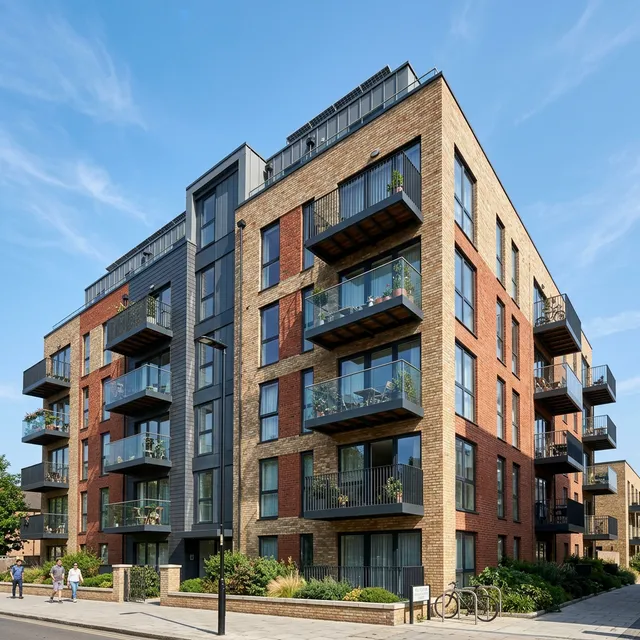
On 1 October 2026, the Building Safety Levy comes into force in England. Introduced under sections 56 to 68 of the Building Safety Act 2022, the levy will apply to all new residential developments requiring building control approval where the scheme includes 10 or more dwellings. That is six months from now. If you are a developer with live or upcoming schemes in that bracket, you need to understand how this charge works, what it will cost you, and what your options are for avoiding or mitigating it.
What the Building Safety Levy Is and Why It Exists
The Building Safety Levy is a new charge on developers of higher-rise and multi-occupancy residential buildings, designed to fund the remediation of unsafe cladding and other fire safety defects in existing buildings. The government estimates that the total remediation cost across England runs into billions of pounds. Rather than funding this entirely from general taxation, the Building Safety Act created a mechanism to recover a portion from developers building new residential stock. The levy is collected by building control bodies — either local authority building control or registered building control approvers — at the point of building control sign-off.
How the Levy Is Calculated and What It Could Cost Your Scheme
The levy rate is calculated per square metre of new residential floorspace and varies by region. The government published indicative rates in the Building Safety Levy consultation response, with figures ranging from approximately £50 to £120 per square metre depending on location. For a typical two-bedroom flat of 65 square metres, that translates to £3,250 to £7,800 per unit. For a 50-unit scheme, the total levy exposure could be £162,500 to £390,000. On tighter-margin schemes — particularly affordable-led or brownfield developments where build costs are already elevated — this is not a rounding error. It is a material cost line that can move a scheme from viable to unviable.
The Critical Deadline: Building Control Applications Before 1 October 2026
The levy applies to building control applications made on or after 1 October 2026. This is the critical detail. It is not linked to the planning application date, the start-on-site date, or the completion date. It is tied to when the building control initial notice or full plans application is submitted. This means that if you can get your building control application in before 1 October, the levy does not apply to your scheme — even if construction has not yet started.
In practice, this creates a de facto deadline of around 31 August 2026 for developers who want to avoid the levy. Building control applications take time to prepare — structural calculations, fire strategy, Part B compliance, Part L energy modelling, and all supporting documentation need to be complete and submitted as a package. If you are working on a scheme that is likely to reach building control stage in the second half of 2026, you need to make a decision now about whether to accelerate the programme to beat the October deadline or accept the levy as a project cost and adjust your viability appraisal accordingly.
Modelling the Viability Impact on Your Development Appraisal
For schemes that will be caught by the levy, the viability impact needs to be modelled before you commit to a land purchase or finalise a funding structure. The levy is payable at building control completion, which means it sits at the back end of your cashflow — but it still needs to be accounted for in your development appraisal from day one. Lenders are already asking about levy exposure in their due diligence, and Homes England has indicated that grant-funded schemes will need to demonstrate that the levy has been factored into the cost plan.
Exemptions for Affordable Housing and Mixed-Tenure Schemes
There are limited exemptions. The consultation confirmed that the levy will not apply to schemes that are exclusively affordable housing, provided they meet the NPPF definition of affordable. Mixed-tenure schemes will pay the levy on the market-sale and market-rent units but not on the affordable housing element. Build-to-rent schemes will pay the levy in full. Purpose-built student accommodation is currently expected to be included, although this remains subject to secondary legislation. If your scheme includes a significant affordable housing component, the exemption can materially reduce the total levy liability — but you need to design the tenure split with the levy in mind, not as an afterthought.
How the Levy Interacts with Section 106, CIL, and BNG Costs
The interaction with Section 106 and CIL is also important. The government has stated that the Building Safety Levy is intended to sit alongside existing developer contributions, not replace them. This means you could be paying CIL, Section 106 affordable housing contributions, Section 106 infrastructure contributions, biodiversity net gain costs, and the Building Safety Levy on the same scheme. For developments in high-CIL boroughs — parts of London, Surrey, Oxfordshire — the cumulative contribution burden is becoming a genuine constraint on viability. Any development appraisal that does not model all of these costs together is incomplete.
What Developers Should Do Now
What should developers do now? First, audit your pipeline. Identify every scheme of 10 or more dwellings that has not yet submitted a building control application. For each one, assess whether it is realistic to submit building control before 1 October 2026. Second, for schemes that will be caught, model the levy impact on your development appraisal using the published regional rates. Test the sensitivity — what happens to your profit on cost if the levy rate is at the higher end of the published range? Third, review your land deals. If you are in negotiations on a site and have not factored in the levy, you need to adjust your residual land value calculation before you exchange.
Our Development Finance Summary is built for exactly this kind of analysis. It models the full cost stack for your scheme — including CIL, Section 106, BNG, and the Building Safety Levy — and calculates your residual land value, profit on cost, and cashflow sensitivity under multiple scenarios. If you need to understand how the levy changes the numbers on a specific site, this is the report that tells you — delivered within 48 hours.
Related Report
Feasibility Intelligence
Planning-ready intelligence from From £995 — delivered within 48hrs
Ready to get started?
Complete desktop planning intelligence for any site in England. From £295.