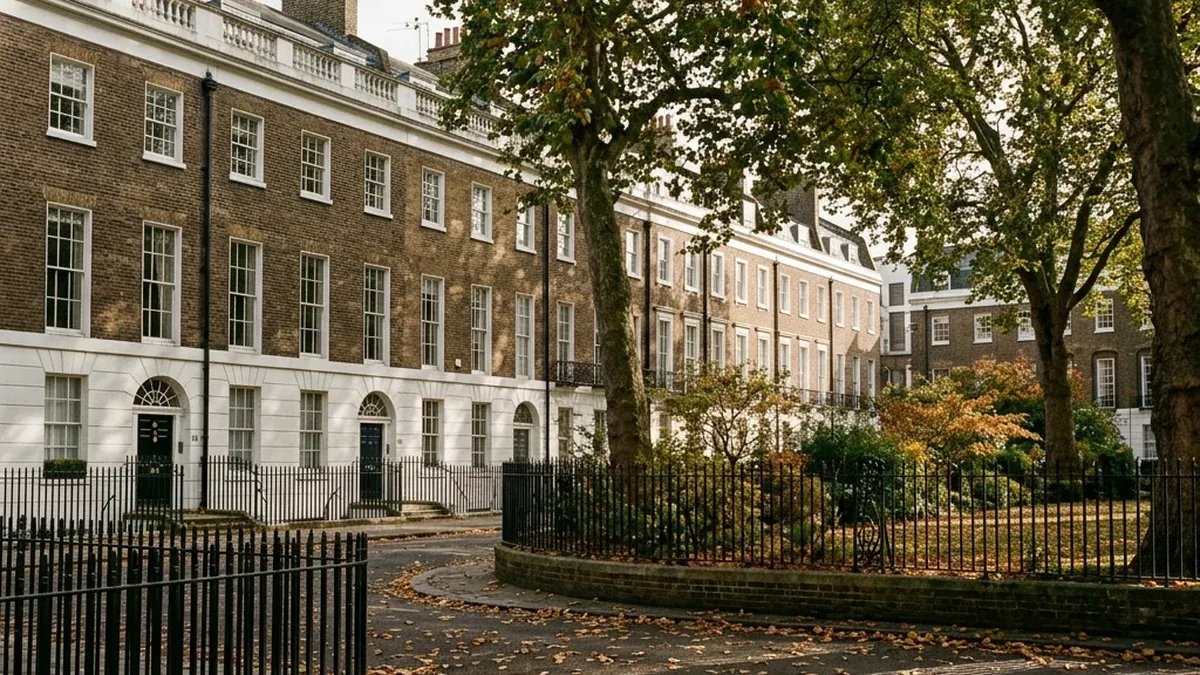
Planning in Camden in 2026
Camden planning constraints can turn a viable acquisition into a stranded site. Conservation areas cover roughly two-thirds of the borough, around 5,600 listed buildings sit on the register, and basement policy and viability evidence drive outcomes on schemes that look straightforward on paper. For SME developers, that means heritage refusal risk, abnormal cost exposure on basements, and affordable housing viability disputes that move offer prices.
Our desktop pack reads any Camden site against the adopted Local Plan, the London Plan, and the heritage, basement and viability stack. From £295. Start with a free site check — Request a Site Appraisal quote or See a sample report.
Local Plan and 5YHLS position
The Camden Local Plan was adopted in June 2017, with the Camden Local Plan Review in preparation through 2026. New policies on heritage, climate change and housing delivery are proposed under the Review. The existing Plan continues to set the development management framework alongside the London Plan.
On housing land supply, Camden's position should be checked against the latest Authority Monitoring Report and the council's published 5YHLS statement at the time of bid, alongside the most recent Housing Delivery Test result published by the department. Mayor of London housing targets and the London Plan apply alongside the Local Plan.
The practical implication: inner London sites will normally sit WITHIN a settlement and be judged under policy S4(1), so the evidenced unmet-need route at S5(1)(j) is generally only available in districts with land outside a settlement boundary, subject to the current 5YHLS and HDT position. Outcomes in Camden are more often determined by heritage harm, basement engineering, viability evidence and townscape impact. See Camden Council Planning for the live policy position and committee decisions.
Constraints typical of Camden development sites
| Constraint | Why it matters in Camden | Developer risk before bid |
|---|---|---|
| Conservation area | Approximately two-thirds of Camden sits within a conservation area; design discipline and character appraisal compliance required | Design constraint reduces massing and GDV; pre-app advisable before offer |
| Listed building setting | 5,600+ listed buildings; NPPF policy HE5(1) setting analysis common, with the section 66 LBCA Act 1990 special-regard duty engaged | Refusal risk on adjoining or near-adjoining sites; heritage statement often required at validation |
| Tree Preservation Orders | Extensive coverage across Hampstead, Highgate, Belsize and Primrose Hill | BS 5837 survey adds programme; root protection areas can sterilise footprint |
| Mayoral CIL plus Camden CIL | Both levies apply on qualifying floorspace | Material abnormal cost on majors; model into residual land value |
| Affordable housing 50% target | Policy H4 on schemes of 25 units or more | Formal viability evidence typically required; offer price sensitivity high |
| Basement development | Camden guidance on Basement Impact Assessment, structural method, and neighbour amenity | Significant abnormal cost and refusal risk on basement schemes specifically |
| Surface water flood risk | Localised low-lying areas including parts of King's Cross and Bloomsbury | NPPF policy F5 sequential test may engage; drainage strategy cost |
| Hampstead Heath SSSI proximity | Ecological assessment and Natural England consultation may be needed for adjacent sites | Survey season can drive 6-12 month programme on sensitive plots |
A typical Camden bid carries three to five of these constraints simultaneously. The desktop pack reads the full overlay against your specific red-line, which matters for auction due diligence, option agreements, conditional exchange and lender comfort. For wider context, see our development land due diligence guide.
Hot policy issues in Camden for 2026
- Camden Local Plan Review preparation underway in 2026, with new policies on heritage, climate change and housing delivery. Affects all site types, particularly small infill of 1-9 flats and listed-building conversion.
- Basement development policy and engineering requirements including BIA scope, party wall coordination, and neighbour amenity tests. Affects basement schemes specifically.
- Tall-building policy in King's Cross and Euston Opportunity Areas. Affects mixed-use intensification and major schemes.
- Affordable housing viability with the 50% Policy H4 target tested through formal viability evidence. Affects majors of 25+ units, including airspace and rear infill where unit count crosses the threshold.
- Tree Preservation Orders across Hampstead, Highgate and Belsize residential conservation areas. Affects mews, rear infill, and change of use on plots with mature trees.
These themes affect bid pricing, scheme design, and the choice between conventional and tilted-balance planning routes. Our note on what reports you need for planning permission sets out the wider report ecosystem.
Reports commonly triggered on Camden sites
Often needed for validation or submission:
- Heritage statement desktop: NPPF policy HE5(1) setting test and the policy HE6 harm framework apply on most Camden applications affecting listed buildings or conservation areas.
- Planning constraints report: conservation area, listed buildings, TPOs, and surface water flood risk frequently overlap on the same site.
- Biodiversity net gain screening: 10% BNG applies subject to statutory exemptions, with on-site, off-site or statutory credit routing depending on the site.
Useful before acquisition:
- Phase 1 desk study: Victorian gasworks legacy at King's Cross and St Pancras, railway sites and urban brownfield mean contamination sources are common and material to abnormal cost.
- Site feasibility study: affordable housing viability evidence is frequently required on schemes meeting the Policy H4 threshold and shapes the offer.
The Site Appraisal flags which of these reports are likely to apply on your red-line, with scoping notes where cost varies by site. See what is included in our desktop pack.
Request a Site Appraisal quote for a Camden site
For SME developers, land buyers and architect-led teams working on Camden sites, whether Bloomsbury or Hampstead conservation area infill, King's Cross regeneration plots, basement-extension residential, or Holborn mixed-use, the entry point is a Site Appraisal from £295.
Why order before you bid:
- Avoid overpaying on a plot where Policy H4 viability or basement abnormals erode residual land value.
- Identify refusal constraints (heritage setting, TPO, conservation area character) before offer, not after exchange.
- Brief your architect and consultants from a known constraint base, before drawing spend.
Inputs: site address or red-line boundary, scheme intent in one sentence. Turnaround: confirmed before you pay. Deliverable: Camden-specific desktop pack covering Local Plan, designations, heritage, ground, flood and ecology overlay. Price: £295 / £395 / £595 by site complexity.
What this desktop report does not replace
The Site Appraisal is a desktop overview based on published Local Plan, supply and HDT data, and public-domain designation mapping. It does not replace a heritage consultant's assessment, a structural engineer's basement design, a viability appraisal, or site-specific ecological survey. Designation percentages are approximated and should be verified against the LPA's published constraints map for site-specific decisions. Last reviewed 2026-05-06. For wider statutory context, see GOV.UK planning permission guidance.
Request a quote for a Site Appraisal from £295, or See a sample report.