Planning in Liverpool in 2026
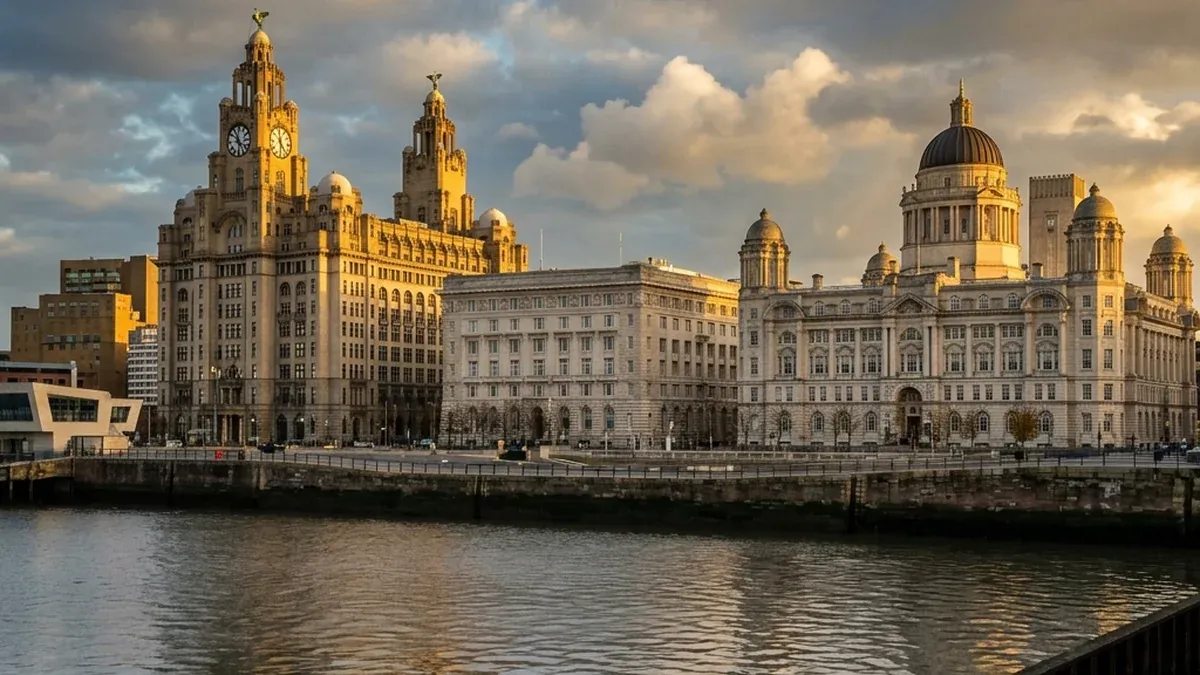
Liverpool planning constraints decide whether a site is biddable before you spend on architect, ecology or ground reports. The headline overlay is heritage-led: the historic waterfront (former Liverpool Maritime Mercantile City World Heritage Site, deleted by UNESCO in 2021), 30+ conservation areas, a large listed-building stock, plus brownfield contamination across former dockside, gasworks and chemical works, Coal Authority Development High Risk Areas in parts of east Liverpool, and Mersey Estuary tidal flood risk on the river frontage.
A Site Appraisal from £295 reads your red-line against the Liverpool Local Plan, the council's published housing supply position, and the heritage, contamination and flood overlay.
Request a Site Appraisal quote for a Liverpool red-line, or See a sample report.
Local Plan and 5YHLS position
The Liverpool City Council planning position in 2026 has three moving parts that materially affect small-scheme bids.
First, the Liverpool Local Plan was adopted in January 2022. It remains the primary policy basis for determination. Liverpool Local Plan Review preparation is underway in 2026, and emerging policies will start to attract limited weight through the year, particularly on tall buildings, waterfront character and brownfield density.
Second, the 5YHLS position. Liverpool's most recent published housing land supply statement should be checked on the council's monitoring page before you bid, because the figure and base date move annually and drive whether the S5(1)(j) unmet-need route is in play. We do not quote a current figure here because it changes; the Site Appraisal reads the latest published statement against your scheme.
Third, Housing Delivery Test results. Check the latest GOV.UK Housing Delivery Test publication for Liverpool's measurement, because a result below 75% opens the evidenced unmet-need route at policy S5(1)(j), and a result below 95% triggers an action plan.
What this means for a small developer in Liverpool:
- If supply is below five years or HDT is below 75%, the S5(1)(j) unmet-need route is available outside a settlement, but heritage and flood still bite through S4(2)(c) on city-centre and waterfront sites.
- If supply is demonstrated, the adopted Local Plan policies (heritage, design, density, flood) drive the refusal risk on a typical infill or conversion bid.
- Either way, do not rely on tilted balance to rescue a heritage-sensitive waterfront or conservation-area scheme. The harm balancing test under policy HE6 is the operative gate.
Read the development land due diligence guide for how supply position and HDT compound on bid pricing.
Constraints typical of Liverpool development sites
| Constraint | Why it matters in Liverpool |
|---|---|
| Brownfield contamination | Phase 1 desk study commonly triggered on former industrial, dockside, gasworks and chemical works land, with Phase 2 ground investigation following where contaminants are identified. |
| Conservation area and listed-building setting | City-centre, waterfront and inner-suburb schemes commonly affected. Listed-building setting and significance under NPPF policy HE5(1), with harm tests under policy HE6. |
| Mersey Estuary tidal flood zones | Sequential test under NPPF policy F5, with climate-change uplift material on the tidal Mersey. See GOV.UK flood risk guidance. |
| Coal Authority Development High Risk Areas | Parts of east Liverpool sit on Lancashire Coalfield legacy. A coal mining risk assessment is commonly required at validation where the LPA's validation list specifies it. See Mining Remediation Authority (formerly the Coal Authority) guidance. |
| Mersey Estuary SPA and Ramsar | HRA screening can apply on residential schemes within the relevant zones. Mitigation contributions depend on the specific zone, scheme type and local HRA framework. |
| Made ground and historic dockside fill | Foundation engineering implications across Liverpool Waters and the docklands. |
| Tall-building townscape and waterfront setting | Heritage harm balancing remains sensitive following the 2021 WHS deletion. |
The desktop pack reads the full overlay against your specific red-line. See what is included in the desktop pack.
Hot policy issues in Liverpool for 2026
- Liverpool Local Plan Review preparation. Emerging policy on tall buildings, waterfront character and brownfield density will start to draw limited weight through 2026. Action: check whether your scheme height or density is reachable under the adopted Plan, not just the emerging position.
- Post-WHS-deletion waterfront heritage. Pier Head, Albert Dock and the wider historic waterfront remain heritage-sensitive. Action: budget for a heritage statement and expect a policy HE6 balancing exercise on tall or dense waterfront proposals.
- Brownfield cost stack. Former dockside, gasworks and chemical-works land routinely needs Phase 1 followed by Phase 2 where contaminants are present. Action: price remediation contingency into the bid before exchange.
- Mersey Estuary HRA. Residential schemes within the relevant zones may need HRA screening or contributions. Action: confirm the zone before assuming a per-unit contribution.
- Coal Authority Development High Risk Areas in east Liverpool. Action: order a coal mining risk assessment early where the validation list requires it, to avoid a delayed validation.
Reports commonly triggered on Liverpool sites
| Report | Typical trigger | When to order | Risk if missed |
|---|---|---|---|
| Phase 1 desk study | Former industrial, dockside, gasworks or chemical-works history | Pre-application | Contamination liability priced in too late, abortive ground costs |
| Coal mining risk assessment | Site within a Development High Risk Area in east Liverpool | Pre-validation | Validation refusal, programme slip |
| Heritage statement desktop | Conservation area, listed-building setting, waterfront | Pre-application | Refusal under policy HE6 |
| Desktop flood risk assessment | Tidal Mersey flood zones, surface water | Pre-application | Failed sequential test under NPPF policy F5 |
| Planning constraints report | Multiple overlapping constraints | Pre-bid | Bid mispriced against undisclosed constraint stack |
The Site Appraisal flags which of these reports apply on your specific red-line and at what indicative cost.
Request a Site Appraisal quote for a Liverpool site
Use a Site Appraisal before you bid, before option, before auction, before pre-app, and before commissioning specialist reports. It is the £295 step that protects the next £20,000.
- Inputs: red-line boundary, postcode, indicative scheme (typically 1 to 20 units, infill, conversion, small brownfield, or mixed-use over retail).
- Turnaround: confirmed before you pay.
- Outputs: constraint risk rating, list of likely specialist reports with indicative budget, no-go flags, and pre-app readiness summary.
- Price: from £295.
What this desktop report does not replace
The paid Site Appraisal is site-specific and reads your red-line against the adopted policies map. This free page is not site-specific. Designation summaries here are drawn from public-domain mapping and should be verified against the LPA's published constraints map for any site-specific decision. The Site Appraisal is a desktop product; it does not replace specialist consultant reports such as a full FRA, heritage statement, ecology survey or intrusive ground investigation, but it tells you which of those you need and roughly what they will cost. Last reviewed 2026-05-07.
Request a Site Appraisal quote for a Liverpool red-line, or See a sample report.