Planning in Mole Valley in 2026
Mole Valley planning constraints will decide whether your site is biddable before your architect lifts a pencil. For small developers, the risk is paying for design, legals or an option fee before Green Belt, National Landscape, flood, heritage and access constraints have killed the route, or knocked 20% off achievable GDV.
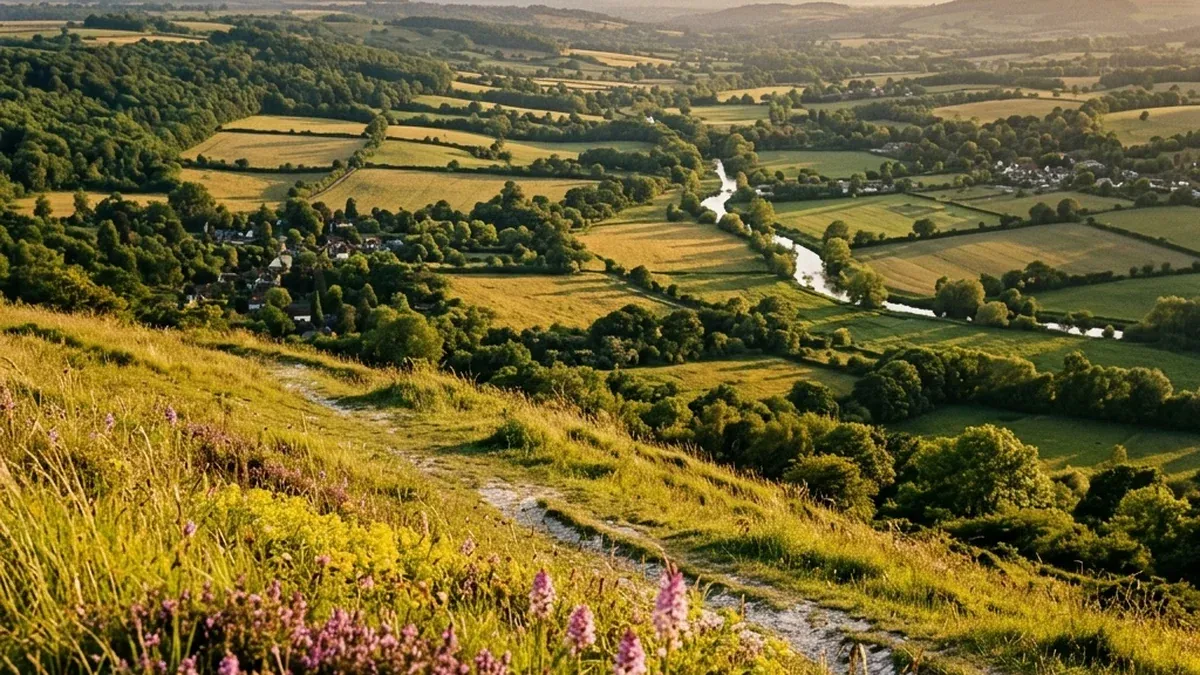
The district is approximately 75% Metropolitan Green Belt and 40% Surrey Hills National Landscape, with the North Downs ridge running through the centre, the River Mole corridor cutting through Dorking and Leatherhead, and 30+ conservation areas spread from Ashtead and Bookham to Brockham, Mickleham, Westcott and Headley. On most rural and edge-of-settlement sites you should expect three to five overlapping designations.
A Site Appraisal from £295 reads any Mole Valley site against the adopted Future Mole Valley Local Plan, the LPA's published five-year housing land supply, the relevant designations and the full constraint overlay. Request a Site Appraisal quote or see a sample Site Intelligence report.
Local Plan and 5YHLS position (2026)
Three things matter on a Mole Valley site in 2026.
First, the Future Mole Valley Local Plan was adopted in October 2024. The first full Authority Monitoring Report cycle since adoption is underway in 2026, and the plan is the starting point for any policy-compliant scheme. Site allocations carry weight that unallocated parcels do not, and any grey belt argument on an unallocated site must be made on its own merits under NPPF policies GB6 and GB7.
Second, on housing land supply, refer to the LPA's most recent AMR for the live 5YHLS figure and base date before pricing a bid. Where supply is below five years the presumption is applied through NPPF policy S3(1), which routes the site by geography: policy S4 inside the settlement boundary, policy S5 outside it. A supply shortfall no longer switches a favourable balance on by itself; outside a settlement it bears on the evidenced unmet-need route at S5(1)(j), which carries its own tests. In Mole Valley those footnote constraints (Surrey Hills National Landscape, Green Belt, designated heritage assets) apply across most of the district, so the tilted balance is rarely a clean argument and should not be priced into a bid without legal review.
Third, the most recent Housing Delivery Test result should be checked on the GOV.UK HDT collection before assuming the presumption is or is not engaged on under-delivery grounds.
For the live position on supply and delivery, see Mole Valley District Council Planning and GOV.UK planning permission guidance.
Request a Site Appraisal quote to get the live Local Plan and 5YHLS read against your specific red-line.
Constraints typical of Mole Valley development sites
| Constraint | Why it matters in Mole Valley |
|---|---|
| Metropolitan Green Belt | Approximately 75% of the district. Very Special Circumstances or grey belt argument under NPPF policies GB6 and GB7 typical on most rural sites. |
| Surrey Hills National Landscape | Approximately 40% of the district. Additional landscape and visual impact assessment expected; boundary updated in 2025. |
| Conservation area or listed building setting | Village and market-town infill commonly affected. NPPF policy HE5(1) setting analysis required, with policy HE6 governing harm. |
| River Mole corridor flood zones | Dorking and Leatherhead sites carry Flood Zones 2, 3 and 3b. Sequential test under NPPF policy F5 frequently engaged. |
| Multiple SSSIs (Box Hill, Mickleham Downs, Norbury Park, Headley Heath) | Ecological screening required where impact pathways exist; HRA where a likely significant effect on a European site cannot be ruled out. |
| Surrey CC highways consultee | Rural village sites with narrow lanes face visibility splay and access-width constraints. |
| Tree Preservation Orders | Extensive across conservation areas and the wooded chalk slopes of the North Downs. |
A typical Mole Valley bid carries three to five of these constraints simultaneously. The desktop pack reads the full overlay against your specific red-line, so you can adjust your offer, condition the contract, or walk away before fees mount. For a deeper read on Green Belt strategy, see our grey belt site check guide.
Hot policy issues in Mole Valley for 2026
- Future Mole Valley Local Plan implementation: 2026 is the first full monitoring cycle since October 2024 adoption. Commercial effect: allocated sites attract a clear policy route; unallocated rural sites need a pre-app and a longer programme.
- Surrey Hills National Landscape boundary update (2025): refreshed designation extent affects sites previously outside the boundary, particularly along southern and western edges. Commercial effect: LVIA cost added, density typically reduced, land value softened on affected parcels.
- Grey belt test under NPPF policies GB6 and GB7 (August 2026 edition): live on previously developed Green Belt sites. The adopted plan identifies a limited number; unallocated grey belt arguments must clear the tests in policies GB6 and GB7 plus the golden rules at policy GB8. Commercial effect: option agreements should be conditional on a positive pre-app outcome.
- River Mole flood risk and climate change uplift: Dorking and Leatherhead sites face tighter sequential and exception-test scrutiny as Environment Agency climate allowances bite. Commercial effect: layout sterilisation in Flood Zone 3b, FRA cost, and refusal risk if sequential test fails.
- Surrey-wide infrastructure capacity: highways and education capacity have featured in recent Surrey committee debates on larger schemes. Commercial effect: S106 and CIL contributions can shift viability, particularly on schemes of 20+ units.
Reports commonly triggered on Mole Valley sites
| Report | When it usually applies | Buyer priority |
|---|---|---|
| Heritage Statement desktop | 30+ conservation areas, around 1,800 listed buildings; setting issues across Dorking, Leatherhead, Ashtead, Bookham, Westcott, Mickleham, Brockham and Headley. | Early red flag |
| Desktop Flood Risk Assessment | River Mole corridor flood zones in Dorking and Leatherhead, including 3b functional floodplain. | Early red flag |
| Biodiversity Net Gain Screening | Multiple SSSIs and mandatory 10% BNG on most sites. | Budget item |
| Planning Constraints Report | Green Belt, Surrey Hills, conservation areas, TPOs. | Usually required post-screening |
| Site feasibility study | VSC and grey belt arguments on Green Belt sites. | Design fix and committee evidence |
The Site Appraisal flags which of the desktop reports apply and gives an indicative cost for each. See what reports you need for planning permission for the wider framework.
Request a Site Appraisal quote for a Mole Valley site
A Site Appraisal tells you whether to bid, reduce your offer, condition the contract, instruct a pre-app, or walk away, before you spend on architects or legals.
- Inputs: site address, red-line boundary, indicative scheme.
- Turnaround: confirmed before you pay.
- Deliverable: written constraints read, Local Plan and 5YHLS position, recommended next-step reports with indicative costs.
- Price: £295 / £395 / £595 depending on site complexity.
Request a Site Appraisal quote or See a sample report.
What this desktop report does not replace
This page is a Mole Valley desktop overview based on published Local Plan, AMR and HDT data, with designation summaries from public-domain mapping. It is not a site-specific planning report. The Site Appraisal reads your red-line against the LPA's adopted policies map and constraint overlay. Designation percentages are approximate and should be verified for site-specific decisions. Desktop intelligence comes first; specialist consultant reports follow where the risk justifies them. Last reviewed 2026-05-06.