Planning in Stoke-on-Trent in 2026
Stoke-on-Trent planning constraints can change your offer price or kill your programme before you reach validation. Coal Authority Development High Risk Areas, deep brownfield contamination from former pottery and ceramics sites, conservation area discipline across the Six Towns, and viability pressure on remediation costs all bear directly on whether to bid, reprice, or walk.
For SME developers, land buyers, and architect-led teams, the question above the fold is commercial. Should this site go to offer at the price the agent is quoting, should it carry an abnormal cost allowance, or should it sit behind a conditional contract while you scope reports.
Request a Site Appraisal quote or see a sample report.
Local Plan and 5YHLS position
Three points anchor the policy picture in 2026.
First, the development plan. The Stoke-on-Trent Core Spatial Strategy was adopted in October 2009 and remains the adopted plan. The emerging Stoke-on-Trent Local Plan reached Regulation 19 stage in 2024, with examination steps following. Until adoption, Core Spatial Strategy policies carry the formal weight, with emerging policy weight calibrated to stage of preparation and outstanding objections. Verify the current stage on the Stoke-on-Trent City Council Planning service before relying on emerging policy.
Second, housing supply. The LPA's published five-year housing land supply position should be checked against the latest Annual Monitoring Report. Brownfield regeneration on former pottery and ceramics sites carries remediation cost that constrains viability and can move supply across measurement periods.
Third, the Housing Delivery Test. Where five-year supply falls below the threshold the presumption is applied through NPPF policy S3(1), which routes the site by geography: policy S4 inside the settlement boundary, policy S5 outside it. A supply shortfall no longer switches a favourable balance on by itself; outside a settlement it bears on the evidenced unmet-need route at S5(1)(j), which carries its own tests. Check the latest Housing Delivery Test results on GOV.UK before committing a scheme to a tilted-balance route.
For small developers, the practical read is this. If the adopted plan is dated and the emerging plan is mid-examination, weight on emerging policy is contestable, appeal risk is live on contested allocations, and a tilted-balance argument is only as good as the current supply figure on the day of determination.
Constraints typical of Stoke-on-Trent development sites
| Constraint | Why it matters | Buyer risk | Common next report | Effect on offer or programme |
|---|---|---|---|---|
| Coal Authority Development High Risk Areas | North Staffordshire Coalfield underlies significant parts of the city | Validation hold, foundation redesign | Coal Mining Risk Assessment | Abnormal cost allowance; possible intrusive investigation before exchange |
| Brownfield contamination | Lead glaze, kiln emission, gasworks, engineering legacy | Remediation cost, viability squeeze | Phase 1 desk study; Phase 2 if triggered | Reprice land; budget remediation in the appraisal |
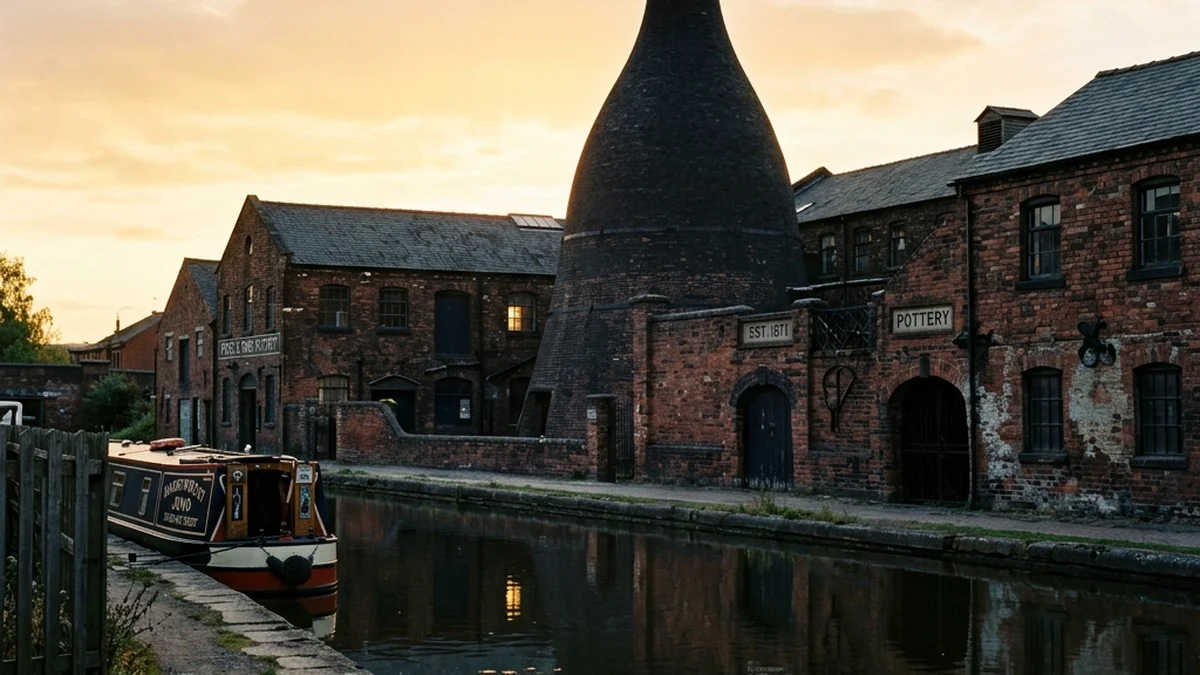
| Pottery-industry heritage assets | Bottle ovens and former factory complexes | Design constraint, possible objection | Heritage statement desktop | Programme delay; design fee uplift |
| Conservation area and listed building setting | Multiple conservation areas across the Six Towns; setting under NPPF policy HE5(1) | Refusal risk on poor design response | Heritage statement desktop | Pre-app strongly indicated |
| Made ground from colliery spoil and ceramics waste | Foundation engineering implications | Abnormal cost on substructure | Geotechnical scoping | Reprice; conditional contract |
| Trent and Fowlea Brook corridor flood zones | Sequential test under NPPF policy F5 sometimes engaged | Refusal or sequential-test failure | Flood Risk Assessment | Possible walk-away on poorly sited parcels |
| Tilted-balance applications | Engaged when five-year supply dips below threshold | Appeal-led route, longer programme | Planning constraints report | Programme uncertainty; legal fee exposure |
Most Stoke-on-Trent bids carry several of these constraints in overlap. The desktop pack reads the stack against your specific red-line. For deeper methodology, see our development land due diligence guide.
Request a Site Appraisal quote on the parcel before your offer goes in.
Hot policy issues in Stoke-on-Trent for 2026
- Brownfield viability evidence: officers and members are alert to remediation cost and abnormal substructure, which means viability arguments on affordable housing and Section 106 contributions need to be evidenced from the appraisal stage, not the application stage.
- Heritage-led regeneration design: in Burslem, Longton and Hanley, design that responds to bottle ovens, factory frontages and conservation area grain is increasingly expected on infill and conversion schemes; generic housebuilder typologies face friction.
- Coal mining validation: a Coal Mining Risk Assessment is a frequent validation trigger across Development High Risk Areas. Submitting without one will typically delay registration.
- Flood sequential test risk: parcels near the Trent and Fowlea Brook corridor can fail the sequential test if the application narrative does not address it from the outset, per GOV.UK flood guidance.
- Affordable housing viability pressure: with cost-loaded brownfield schemes, viability negotiation on affordable housing and contributions is normal. Lenders and funders expect to see this addressed in the appraisal pack.
Reports commonly triggered on Stoke-on-Trent sites
Often validation-critical:
- Coal Mining Risk Assessment. Required at validation across Development High Risk Areas. Methodology aligns with Coal Authority guidance.
- Heritage statement desktop. For sites within or adjoining conservation areas or affecting the setting of listed buildings under NPPF policy HE5(1).
Often due-diligence-led:
- Phase 1 desk study. Brownfield regeneration sites with coal mining, pottery, ceramics and gasworks legacy. Frequent starting point for a contamination workstream.
- Contaminated land desktop study. Lead glaze legacy on former pottery sites, kiln emission and ceramics waste demand specific contamination scoping.
- Planning constraints report. Consolidates the coalfield, brownfield, heritage and contamination overlay on a single red-line.
The Site Appraisal flags which of these apply to your parcel and at what cost. See what reports you need for planning permission for the wider framework.
Request a Site Appraisal quote for a Stoke-on-Trent site
For SME developers, land buyers, and architect-led teams working on Stoke-on-Trent parcels, the right entry point before offer or exchange is a Site Appraisal from £295.
- Inputs: red-line boundary, postcode, scheme intent in one paragraph.
- Turnaround: confirmed before you pay.
- Deliverable: Stoke-on-Trent constraints read, Local Plan and 5YHLS position, report-trigger list with costed next steps.
- Price: from £295.
Start with a free site check — Request a Site Appraisal quote or See a sample report.
What this desktop report does not replace
This page provides a Stoke-on-Trent desktop overview from public-domain sources. It is not a site-specific planning constraints report, and the desktop Site Appraisal does not replace specialist consultant reports such as a Coal Mining Risk Assessment, Phase 2 ground investigation, intrusive heritage assessment, or Flood Risk Assessment. Designation summaries should be verified against the LPA's published constraints map. Last reviewed 2026-05-07.